
How much is my supported living business worth?
Get a free, indicative valuation based on real market data. No documents needed — it takes around 60 seconds.
Updated October 2026Completely confidential
Step 1 of 3
Get your valuation
Select
United Kingdom
Select region
Completely confidential
Trusted by owners across regulated sectors




Trusted by business owners
Find out how much your business is worth
01
A few quick questions
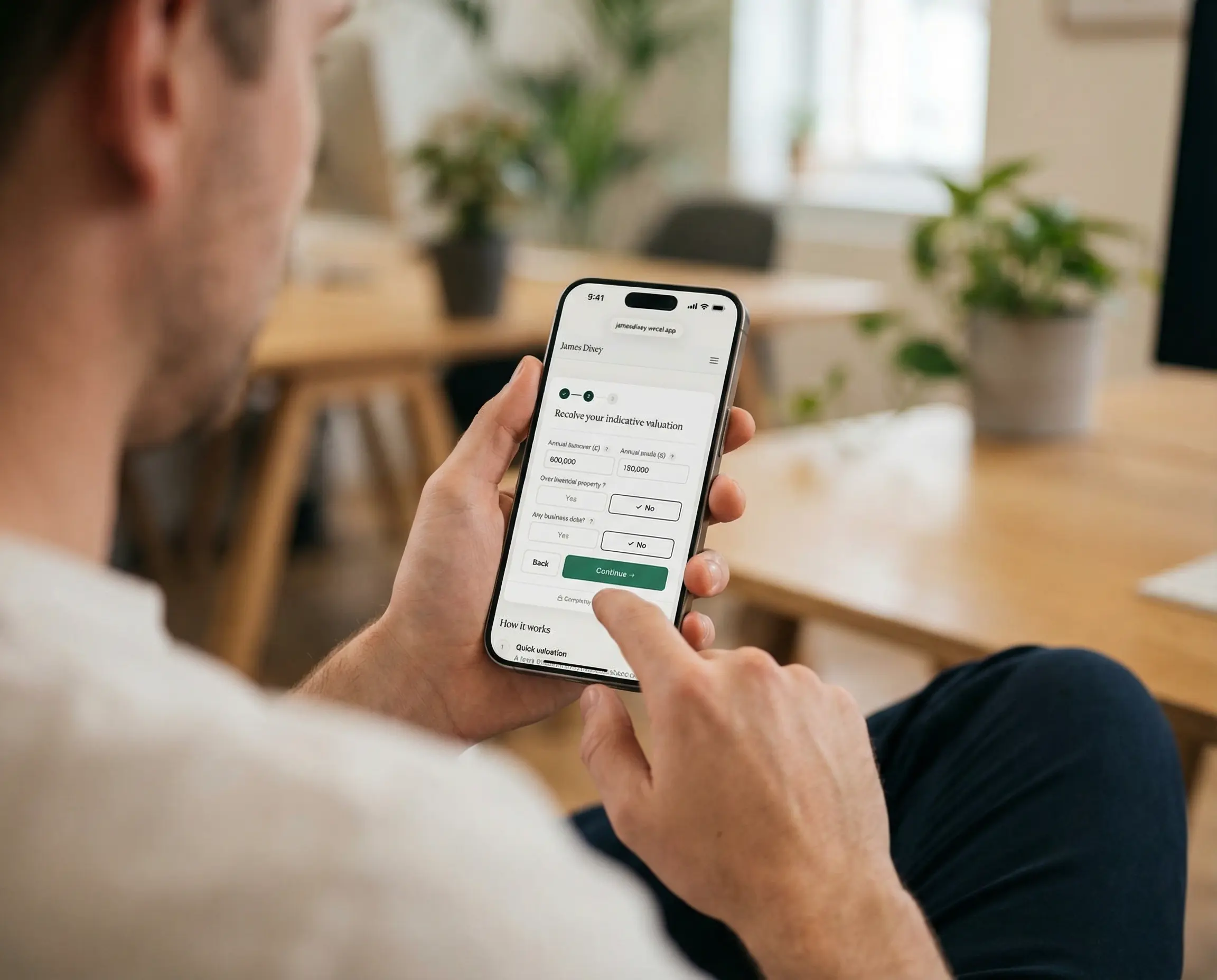
Everything we ask, you already know. No documents or financials needed. Takes around 60 seconds.
02
Get your indicative range
See what businesses like yours are selling for, based on up-to-date valuation multiples in your sector.
Indicative valuation range
£3.4m – £3.8m
£2.5m£5m
Speak with a specialist
03
Talk to a sector specialist
Speak with an advisor who understands your market, can give you a more accurate valuation, and help you find the right buyer when you're ready.

How are supported living businesses valued?
Supported living businesses are valued primarily on a multiple of adjusted earnings (EBITDA), similar to other care businesses. However, there are some important distinctions. Because supported living providers typically don't own the accommodation — tenants hold their own tenancies — the valuation is focused squarely on the care and support operation rather than property. This can actually simplify things, but it also means the strength of your contracts, referral relationships, and workforce are even more central to your value.
What multiples do supported living businesses sell for?
Multiples for supported living providers generally range from 4x to 8x adjusted earnings, with the higher end reserved for businesses that can demonstrate strong, long-term commissioning relationships and a track record of delivering complex care packages. When we speak with buyers in this space, they're often looking for providers with specialist capabilities — learning disabilities, autism, mental health, or acquired brain injury — because these services command higher hourly rates and are harder to replicate.
What makes a supported living business more valuable?
- Commissioning relationships. Stable, long-standing contracts with local authorities and clinical commissioning groups are the foundation of your value. Buyers want to see established referral pathways and a track record of delivering against commissioned outcomes.
- Specialisation and complexity. Providers supporting individuals with complex needs — particularly where staff require specialist training — tend to attract higher valuations. The higher hourly rates and barriers to entry make these services more defensible.
- CQC rating. As with all regulated care, your CQC rating matters significantly. A "Good" or "Outstanding" rating is expected by most buyers, and anything below that will narrow your options.
Want a more accurate picture?
An online calculator is a useful starting point. Speak with our team to understand what your supported living could realistically achieve.